

Modern British Iron stocks direct-fit clutch, throttle, speedometer, choke and seat lock cables for Hinckley-era Triumph motorcycles built from the late 1990s through the 2010s, including the air-cooled Bonneville, T100, SE, Thruxton, Scrambler, America and Speedmaster, the Thunderbird 1600/1700, the Rocket III and the Speed Triple, Sprint and Daytona triples. Every cable on this page is made by Venhill in the UK or Barnett in the USA, and each is matched to a specific model and year range so it fits the way the original did.
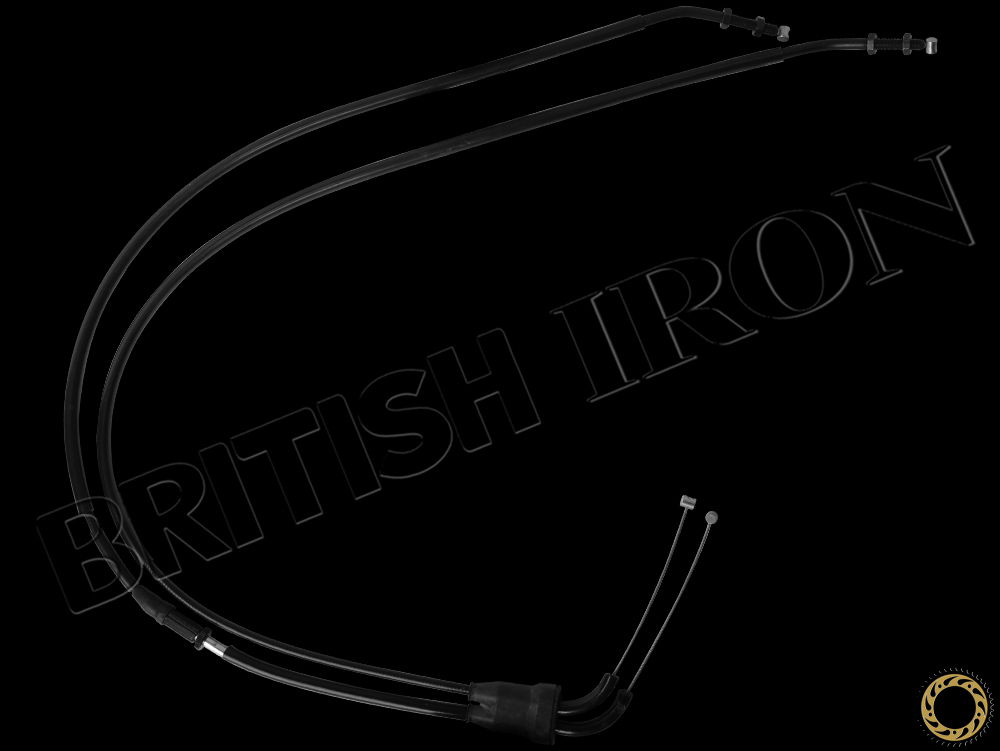
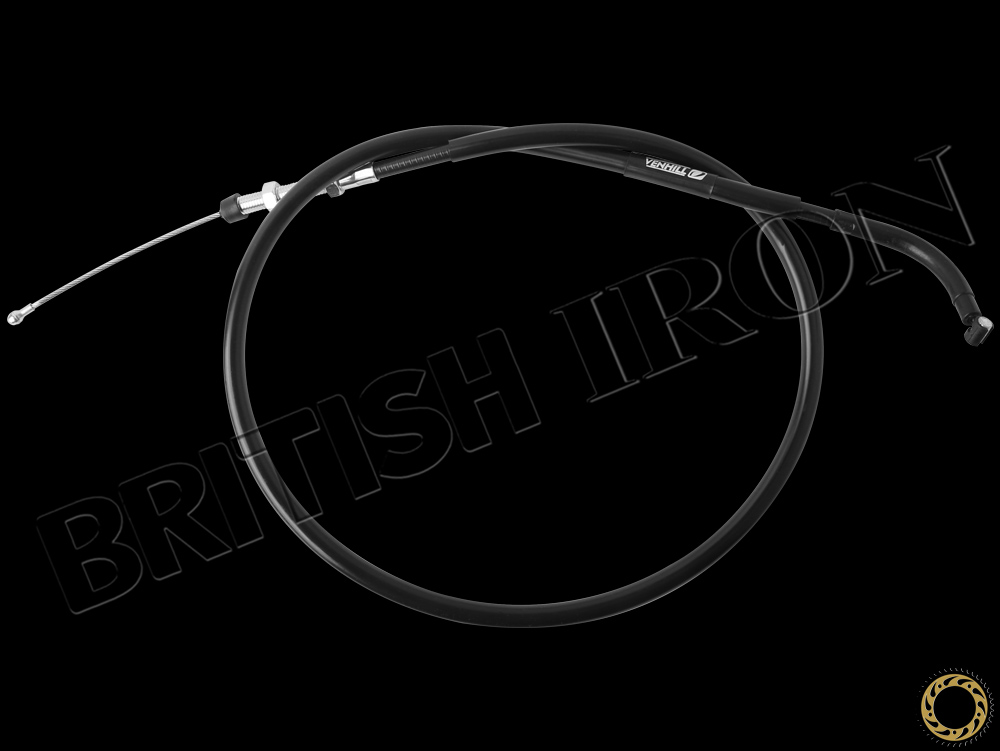

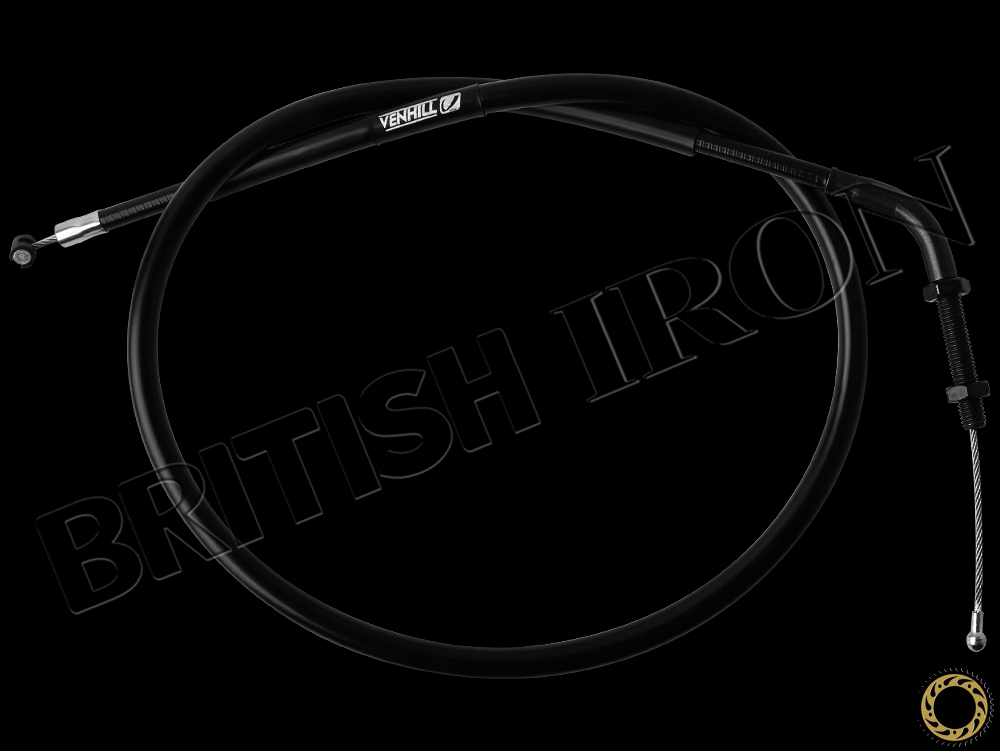


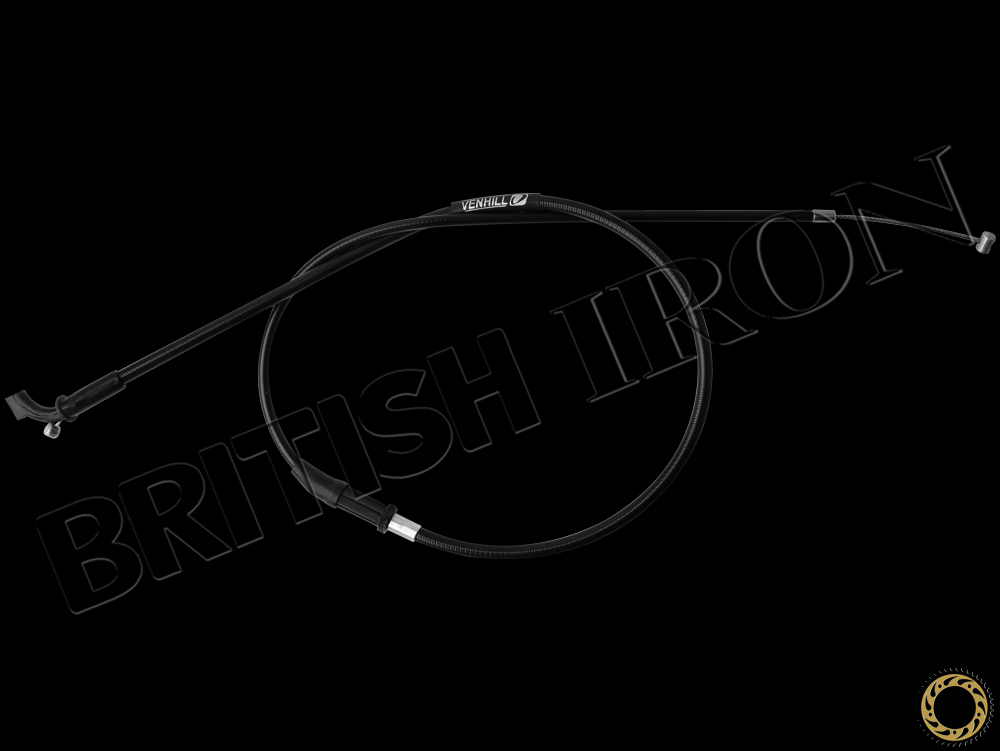
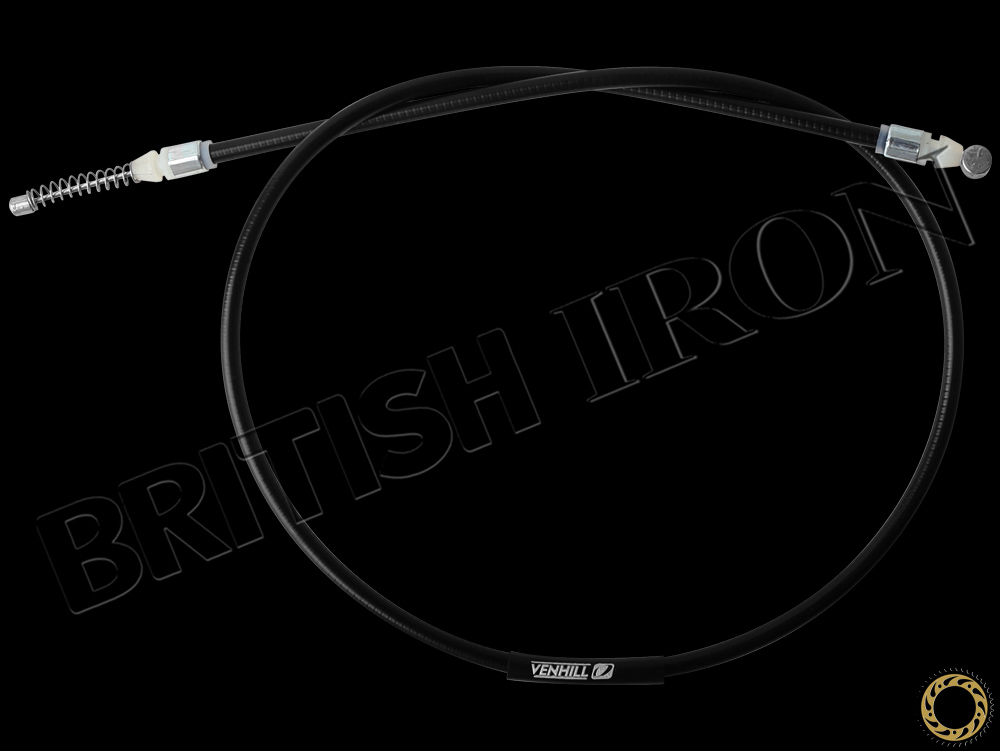
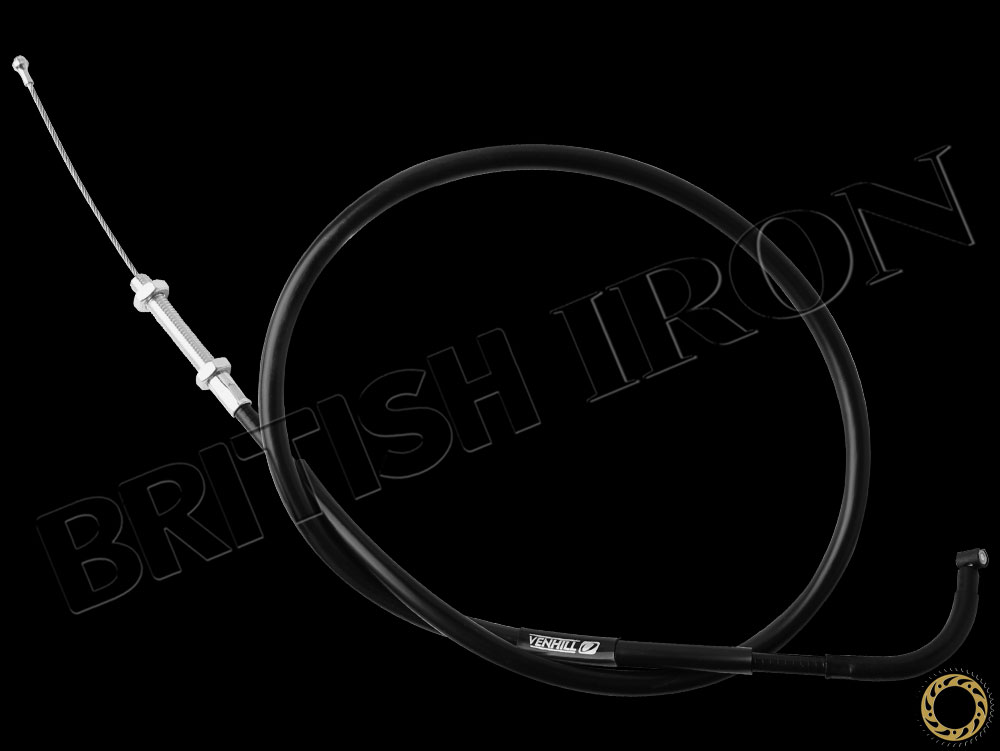
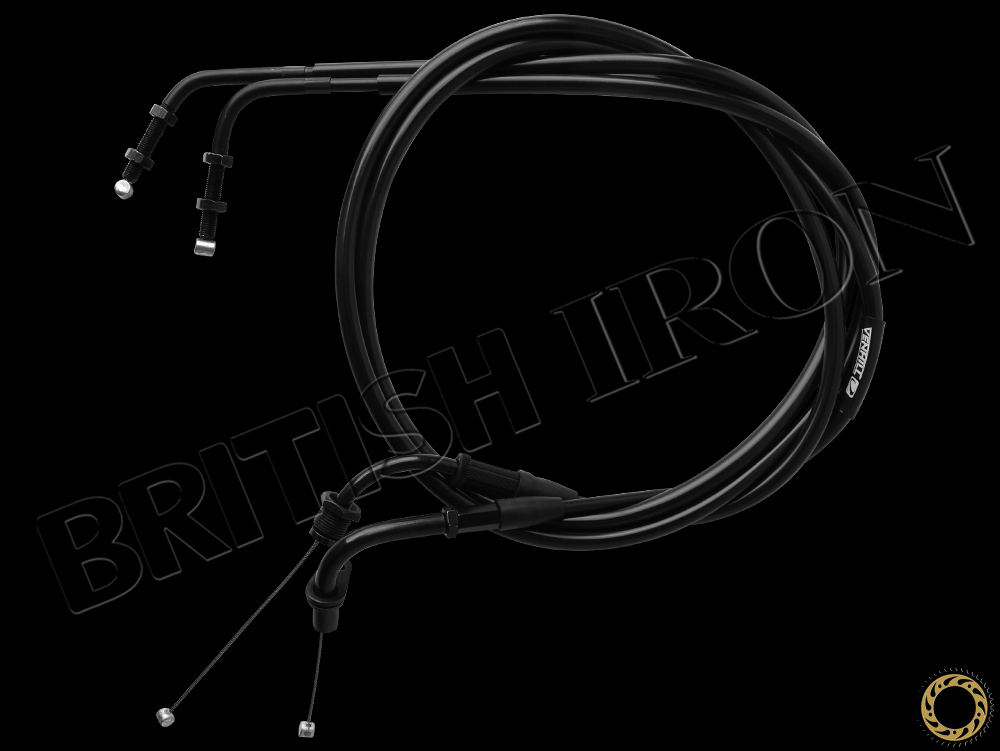


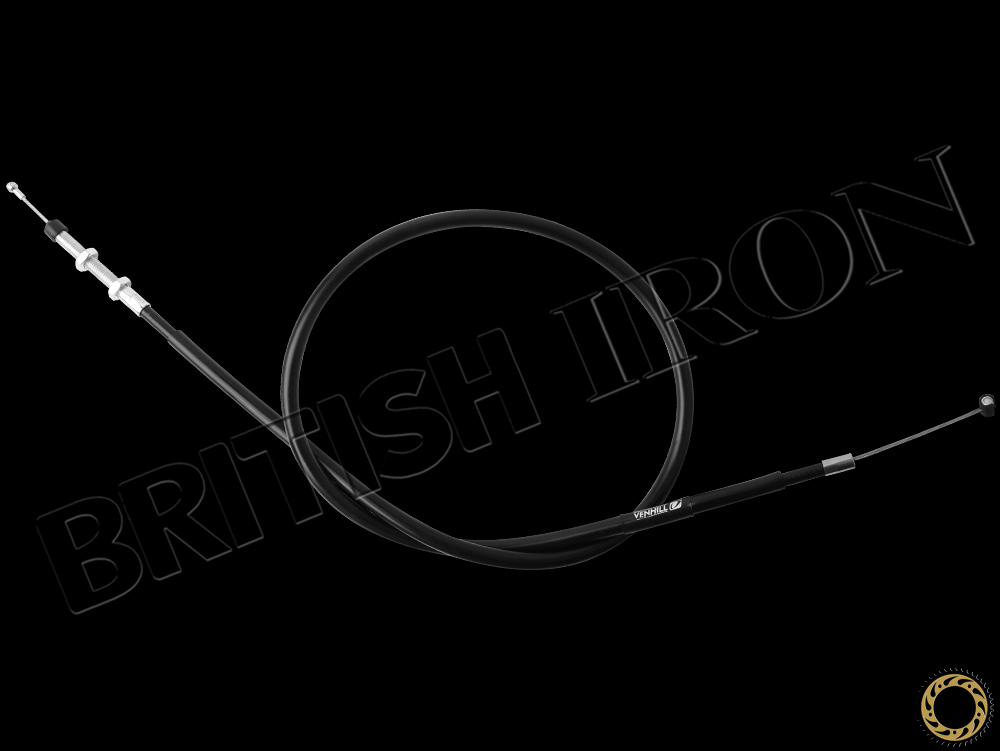
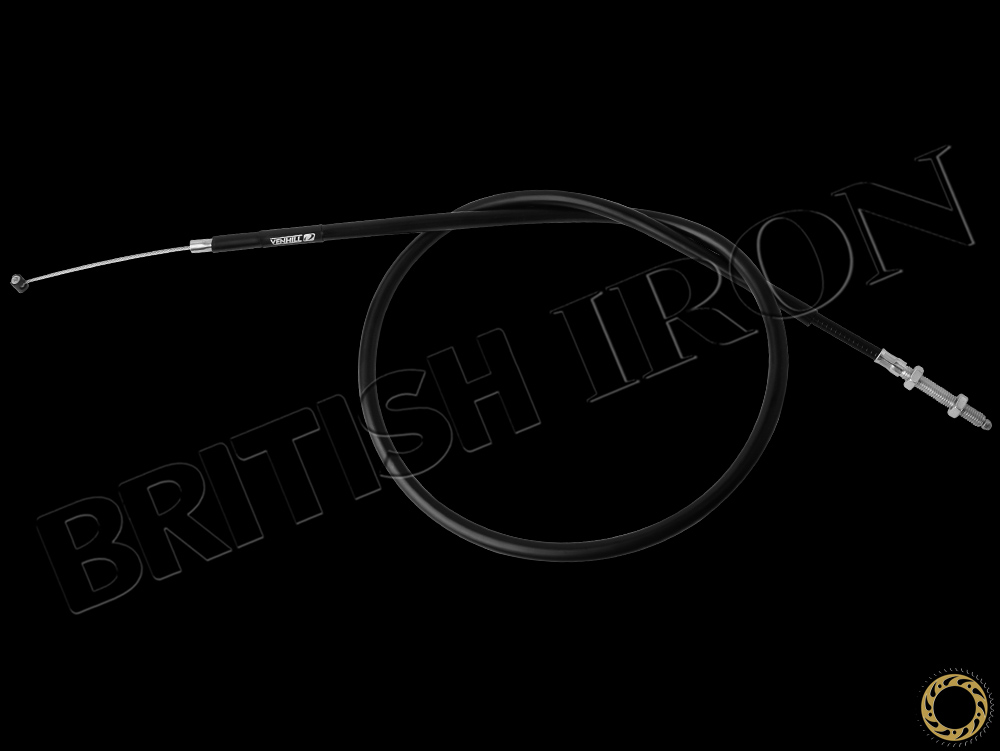
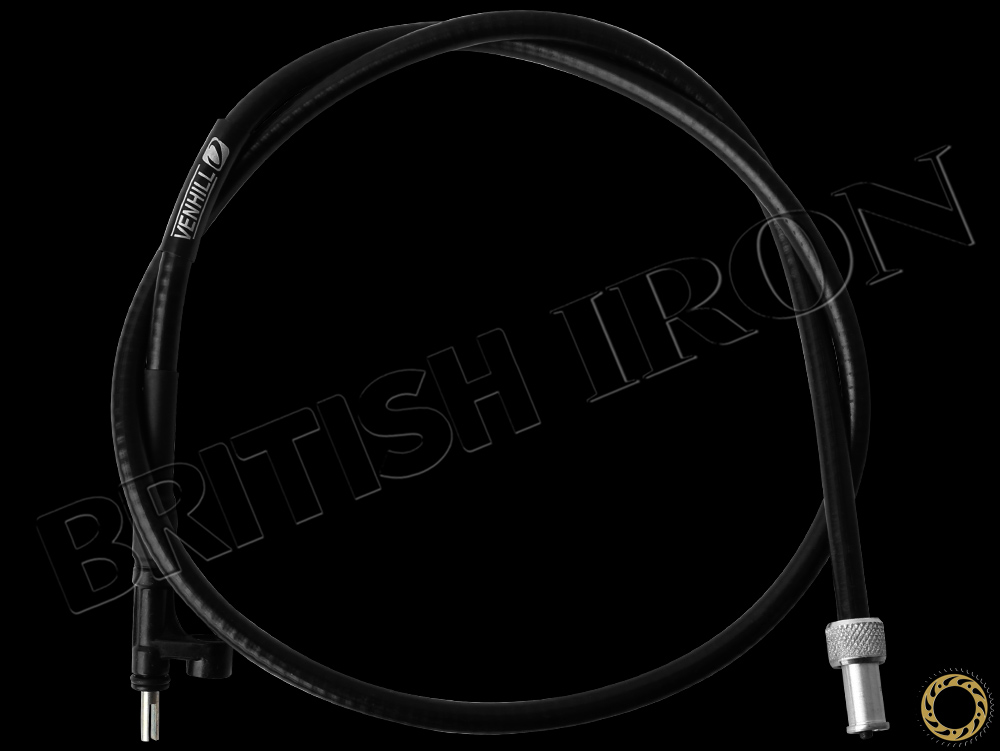
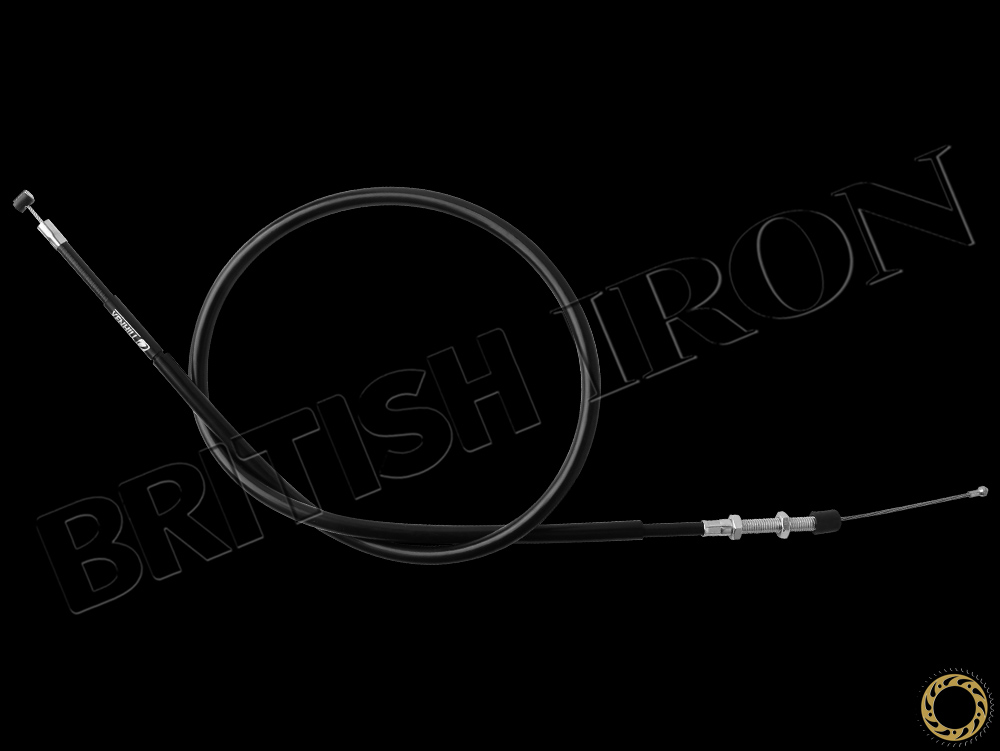

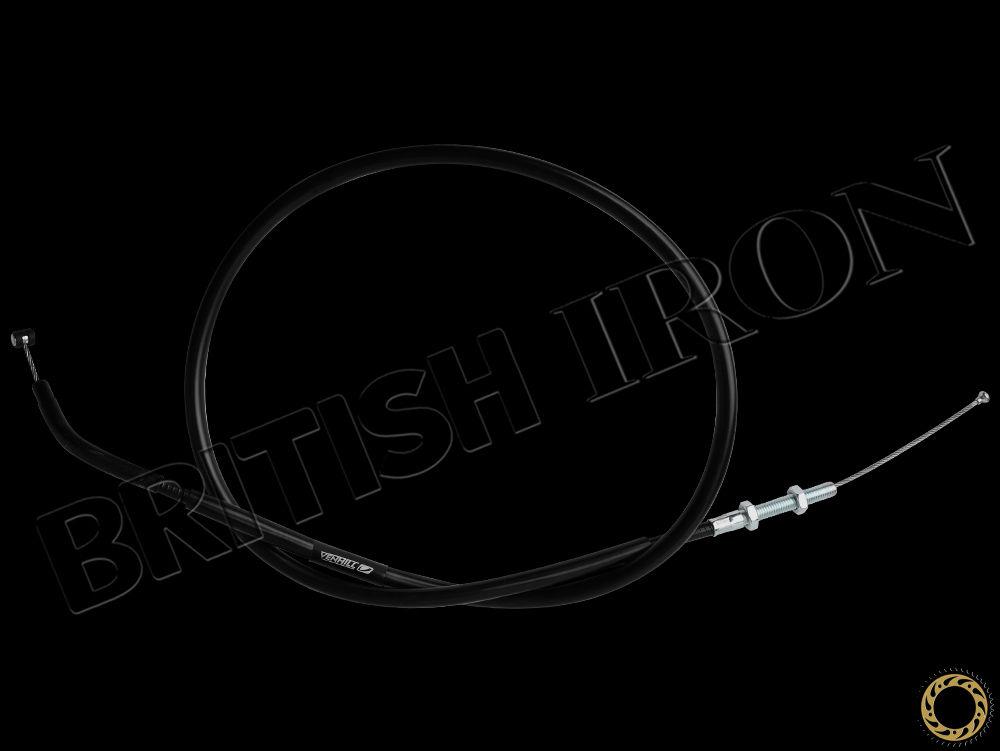

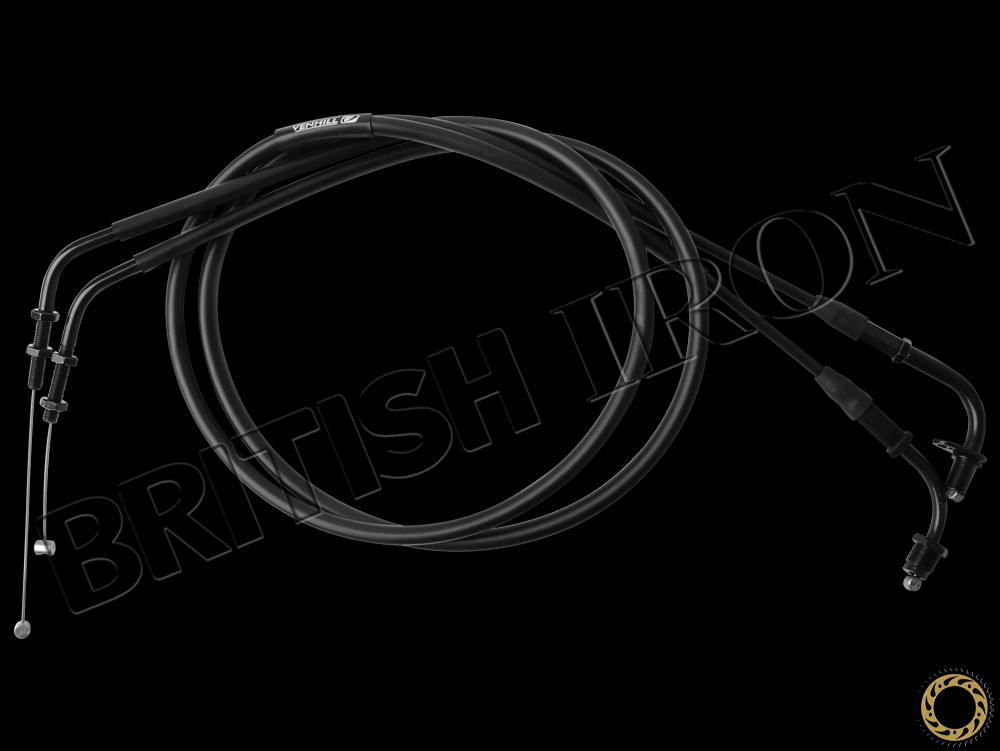

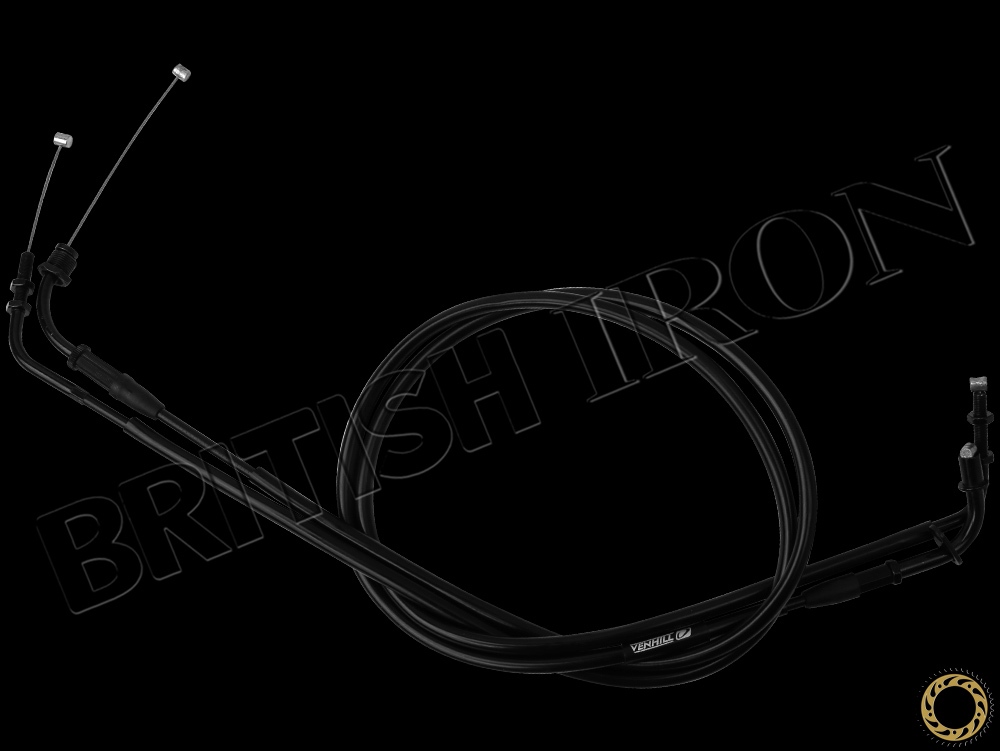


Modern British Iron stocks direct-fit clutch, throttle, speedometer, choke and seat lock cables for Hinckley-era Triumph motorcycles built from the late 1990s through the 2010s, including the air-cooled Bonneville, T100, SE, Thruxton, Scrambler, America and Speedmaster, the Thunderbird 1600/1700, the Rocket III and the Speed Triple, Sprint and Daytona triples. Every cable on this page is made by Venhill in the UK or Barnett in the USA, and each is matched to a specific model and year range so it fits the way the original did.
Not sure which cable you need? Use the model finder below, read the section on what makes Triumph cables different, or send us your VIN and we’ll confirm the right part before you order.
Triumph Cables We Stock
- Throttle cables: push and pull (opening and closing) cables, sold singly or as matched sets, for carbureted and fuel-injected Triumph twins, the Rocket III and the 955i and 1050 triples
- Clutch cables: model-specific lengths for the Bonneville, T100, SE, Thruxton, Scrambler, America, Speedmaster, Thunderbird, Rocket III, Speed Triple and Sprint ST.
- Speedometer cables: for the America and Speedmaster cruisers, which use a mechanical speedo drive.
- Choke cables: for carbureted Triumph models with a handlebar choke lever.
- Seat lock cables: for the Daytona 955i and Speed Triple 955i.
Looking for braided brake lines? See our Triumph brakes collection and the Goodridge and Galfer brand pages.
Venhill vs Barnett: Which Triumph Cable Brand Is Right for You?
Both brands make cables that meet or exceed OEM quality. The main differences are in the construction.
Venhill Featherlight cables (UK)
- Marine-grade stainless steel inner wire that resists corrosion
- PTFE (Teflon) liner for very low friction and a light lever and throttle feel (Venhill USA)
- No oiling needed on the inner wire. Venhill says lubrication won’t improve the feel and can clog the cable with dirt (Venhill FAQ)
- A good pick for riders who want the lightest clutch pull, or who ride in wet weather
Barnett cables (USA)
- Made in the USA since 1948, with all fittings and hardware made in-house (Barnett)
- “Long lay” longitudinally wound casing with stainless steel wire rope and a Teflon, nylon or HDPE inner liner, so the cable doesn’t flex under load
- Barnett’s High Efficiency clutch wire has a nylon coating and silicone pre-lube for less lever effort (Barnett High Efficiency cables)
- Throttle cables are sold separately as pull or push cables, or as matched sets for some models
- A strong choice for cruiser owners (America, Speedmaster, Thunderbird, Rocket III) and anyone who wants a US-made part
Tip for reading Barnett part numbers: on this page, Barnett numbers starting MBI-75-10 are clutch cables, MBI-75-30 are pull (opening) throttle cables, MBI-75-40 are push (closing) throttle cables and MBI-75-33 are push and pull throttle sets.
Find Your Triumph Cable by Model
Model years follow US-market specifications. Check the product listing for exact fitment and VIN breaks before you order.
| Model | Clutch cable | Throttle cable |
| Bonneville / T100 (carbureted), 2001–2008 | Venhill MBI-01-3-116, Barnett MBI-75-10019 | Venhill MBI-01-4-143, Barnett pull MBI-75-30019 + push MBI-75-40019 |
| Bonneville / T100 (EFI), 2009–2016 | Venhill MBI-01-3-116 (T100), Barnett MBI-75-10019 (T100) | Venhill MBI-01-4-161, Barnett pull MBI-75-30026 + push MBI-75-40026 |
| Bonneville SE / EFI Bonneville, 2009–2015 | Venhill MBI-01-3-143, Barnett MBI-75-10025 | Venhill MBI-01-4-151, Barnett set MBI-75-33025 |
| Scrambler (air-cooled) | Venhill MBI-01-3-123 | Venhill MBI-01-4-151, Barnett set MBI-75-33025 (EFI, 2009–2015) |
| Thruxton (carbureted), 2004–2008 | Venhill MBI-01-3-139, Barnett MBI-75-10029 | Venhill MBI-01-4-152, Barnett set MBI-75-33029 |
| Thruxton (EFI, air-cooled), 2009–2015 | Venhill MBI-01-3-122 (2009–2012), Barnett MBI-75-10030 | Venhill MBI-01-4-138 (2009–2012), Barnett pull MBI-75-30030 + push MBI-75-40030 |
| America (carbureted) | Venhill MBI-01-3-114, Barnett MBI-75-10020 | Venhill MBI-01-4-145 (2002–2007), Barnett pull MBI-75-30020 + push MBI-75-40020 |
| Model | Clutch cable | Throttle cable |
| America (EFI) | Venhill MBI-01-3-114, Barnett MBI-75-10027 (2011–2016) | Venhill MBI-01-4-139, Barnett pull MBI-75-30027 + push MBI-75-40027 (after VIN 468390) |
| Speedmaster (carbureted), 2003–2008 | Venhill MBI-01-3-123, Barnett MBI-75-10023 | Venhill MBI-01-4-141 (2002–2007), Barnett pull MBI-75-30023 + push MBI-75-40023 |
| Speedmaster (EFI), 2009–2015 | Barnett MBI-75-10023 | Barnett pull MBI-75-30028 + push MBI-75-40028 |
| Thunderbird 1600/1700, 2009–2016 | Barnett MBI-75-10031 (non-Commander), Barnett MBI-75-10032 (Commander/LT, 2014–2016) | Barnett pull MBI-75-30031 + push MBI-75-40031 |
| Rocket III (standard) | Barnett MBI-75-10021 (non-Touring, 2005–2018) | Barnett pull MBI-75-30021 + push MBI-75-40021 |
| Rocket III Classic | Barnett MBI-75-10021 | Barnett pull MBI-75-30022 + push MBI-75-40022 |
| Rocket III Touring, 2008–2016 | Contact us | Barnett pull MBI-75-30024 + push MBI-75-40024 |
| Speed Triple 955i | Venhill MBI-01-3-138 (1999–2004) | Venhill MBI-01-4-153 |
| Speed Triple 1050 / Sprint 955i | See Sprint ST below | Venhill MBI-01-4-158 |
| Daytona 955i | Contact us | Venhill MBI-01-4-153 |
| Sprint RS (1999–2004) / Sprint ST (1999–2010) | Venhill MBI-01-3-149 (Sprint ST) | Venhill MBI-01-4-155 |
Other cables: Venhill speedo cable for America and Speedmaster MBI-01-7-103, Venhill choke cable MBI-T01-5-110 and Venhill seat lock cable for Daytona and Speed Triple 955 MBI-01-12-100.
What Makes Triumph Cables Different: A Guide for New Owners
If you’re new to working on a Hinckley Triumph, these are the details that most often lead to ordering the wrong cable.
1. Carburetor or fuel injection decides your throttle cable
The air-cooled Bonneville family (Bonneville, T100, Thruxton, Scrambler, America and Speedmaster) used carburetors through 2007. Triumph introduced fuel injection on 2008 UK models, and US models switched for the 2009 model year (Wikipedia: Triumph Bonneville). The EFI throttle bodies were styled to look like carburetors, so a 2009 Bonneville can look almost identical to a 2007 (Bennetts BikeSocial). The throttle cables are different, though. If you aren’t sure which you have, look for fuel injectors and a fuel pump, or check your VIN and owner’s handbook.
2. Most Triumphs use two throttle cables: push and pull
Modern Triumphs use a pair of throttle cables. The pull (opening) cable opens the throttle when you twist the grip. The push (closing) cable pulls it shut when you roll off. Both must be fitted and correctly adjusted. Replace them as a pair, because if one is worn the other usually is too. Some cables on this page are sold singly (pull or push) and some as matched sets, so check the listing before you add to cart.
3. 2016 and newer liquid-cooled twins have no throttle cable
The liquid-cooled Bonneville T100, T120, Speed Twin, Bobber and Speedmaster use an electronic ride-by-wire twist grip. Triumph’s handbook says there are “no direct-acting cables in the system” (Triumph owner’s handbook). These bikes still use a clutch cable. Don’t confuse an air-cooled 2003–2015 Speedmaster with the liquid-cooled 2018-on Bonneville Speedmaster. They share a name but no cables.
4. Handlebar height and bar swaps change cable length
Triumph built US-spec and UK-spec bikes with different handlebars, and many owners fit ape hangers, drag bars, clip-ons or risers. Each change can make a stock-length cable too short (tight when you turn the bars) or too long (it kinks or snags). Barnett makes cables in custom lengths over or under stock (Barnett custom cables). Venhill notes that a cable built to original specs won’t suit a bike with higher or lower bars (Venhill). If your bars aren’t stock, measure your old cable and contact us before ordering. Browse bars and levers in our handlebars, grips and levers collection.
5. Mid-year changes and VIN cut-ins matter
Triumph sometimes changed parts partway through a model year. The America EFI throttle cables on this page, for example, fit bikes after VIN 468390. Look up your VIN (on the steering head and the frame plate), then compare it to the listing. When in doubt, compare your old cable’s length and end fittings with the new one before you install it.
6. Speedo cables only fit certain models
Most Hinckley Triumphs read road speed electronically. The America and Speedmaster cruisers use a mechanical speedometer driven by a cable, so that’s where you’ll need one. Shop gauges and speedo parts in our instruments and gauges collection.
7. Riding a classic Triumph instead?
This page covers Hinckley-era Triumphs (1990s on). For Meriden-era Triumphs from the 1960s to the 1980s (T100, T120, TR6, T140, T150), visit our sister store’s classic Triumph cables collection.
Triumph Cable Installation Tips
1.Photograph the original routing first. Take photos of the old cable from both ends before you remove it, including every guide, clip and tie. Route the new cable along the same path. A wrong route is the most common cause of a throttle that sticks or an idle that rises when you turn the bars.
2.Compare old and new before you fit. Lay the new cable next to the old one and check the housing length, end fittings and adjusters. Allow for some stretch in the old cable.
3.Disconnect the battery for throttle-body work. On EFI twins you’ll often remove the seat and lift the tank to reach the throttle body end. Triumph’s procedure starts by disconnecting the battery, negative lead first (Triumph owner’s handbook).
4.Fit and adjust the pull (opening) cable first. Then fit the push (closing) cable. Center the twist grip adjuster first so you have room to fine-tune either way. Use the adjusters at the throttle body or carburetor end for big changes (Venhill push-pull cable guide).
5.Set throttle free play. Triumph specifies 2–3 mm (0.08–0.12 in) of twist grip free play on its cable-throttle twins (Triumph owner’s handbook). Check your model’s handbook for the exact figure.
6.Set clutch free play. Triumph specifies 2–3 mm (0.08–0.12 in) of free play at the clutch lever. Use the lever adjuster for small changes and the lower cable adjuster for large ones (Triumph owner’s handbook). Too little free play can make the clutch slip, and too much can make it drag.
7.Do the lock-to-lock test. Turn the handlebars from full left to full right. The throttle must snap closed at every position. Then repeat with the engine idling in neutral. If the idle rises as you turn the bars, the cable is too short, misrouted or over-tightened.
8.Keep cables away from heat and loose at the ties. Leave clearance from the exhaust headers and engine. Don’t pull cable ties tight around a cable, because it needs to slide as the suspension and steering move.
9.Grease the nipples, not the inner wire. Use a small amount of copper grease on cable nipples where they sit in the lever or throttle drum. Barrel nipples must rotate freely in the lever (Venhill installation guide). Avoid heavy grease, chain lube and engine oil, which attract dirt.
10.Don’t oil a Teflon-lined cable. Venhill cables are PTFE-lined and don’t need lubrication. Speedo cables are the exception. Venhill recommends 80W-90 gear oil for those (Venhill FAQ).
11.Test ride carefully. Before you ride, check that the throttle returns crisply to idle and the clutch fully disengages. Then test in a safe, quiet place.
Need tools for the job? See our workshop tools and Triumph service tools. For step-by-step repair guides, visit the Modern Triumph Tech Blog.
Signs Your Triumph Cable Needs Replacing
- A stiff or notchy clutch lever, or a throttle that feels gritty
- A throttle that’s slow to return to idle, or that sticks partly open
- Frayed strands at either nipple, where most cables break (Venhill clutch cable guide)
- Cracked, kinked or heat-damaged outer casing
- You’ve run out of adjustment at both adjusters
- Gear changes get harder or the clutch drags
- A speedometer needle that bounces or reads zero on an America or Speedmaster
If the clutch still slips or drags after adjusting a new cable, the problem may be inside the engine. See our clutch and drivetrain parts. If your carbureted Triumph idles poorly after a throttle cable change, check carburetor sync and our carburetion and fuel delivery parts.
Related Triumph Parts
- Handlebars, grips and levers
- Clutch, drivetrain and transmissions
- Carburetion and fuel delivery
- Brakes and brake lines
- Instruments, navigation and gauges
- Seats and seat parts
- Hardware
- Shop by vehicle
Questions about fitment, shipping or returns? See our FAQ and shipping and returns pages, or call 720-570-7884 (Monday–Friday, 9 AM–5 PM MT).
Which cable do I need for my Triumph Bonneville?
It depends on the year and fuel system. Carbureted Bonnevilles and T100s (US models through 2008) use different throttle cables from fuel-injected models (2009–2016). The Bonneville SE and EFI Bonneville also use their own clutch cable. Use the model finder on this page, or send us your VIN and we’ll confirm the correct part.
What is the difference between a push and a pull throttle cable?
The pull (opening) cable opens the throttle when you twist the grip. The push (closing) cable pulls the throttle shut when you roll off. Most modern Triumphs use both. Replace them as a pair, and always fit and adjust the pull cable first.
Do 2016 and newer Triumph Bonnevilles have throttle cables?
No. The liquid-cooled Bonneville T100, T120, Speed Twin, Bobber and Speedmaster use an electronic ride-by-wire throttle with no direct-acting cables. They do still use a clutch cable.
How can I tell if my Triumph has carburetors or fuel injection?
Triumph styled its EFI throttle bodies to look like carburetors, so looks alone can fool you. US air-cooled twins switched to fuel injection for 2009 (UK models for 2008). Fuel-injected bikes have injectors and an in-tank fuel pump. Your VIN and owner’s handbook will also tell you.
Should I buy Venhill or Barnett cables for my Triumph?
Both meet or exceed OEM quality. Venhill Featherlight cables (UK) use a marine-grade stainless inner wire and a PTFE liner for very low friction. Barnett cables (USA) use long-lay casing, stainless wire rope and a Teflon, nylon or HDPE liner, and Barnett can build custom lengths. Choose by availability for your model, the feel you prefer and whether you want UK or US manufacture.
How much free play should my Triumph clutch cable have?
Triumph specifies 2–3 mm (0.08–0.12 in) of free play at the clutch lever. Make small adjustments at the lever adjuster and larger ones at the lower cable adjuster, then tighten the lock nuts.
How much free play should my Triumph throttle cable have?
On cable-throttle Triumph twins, Triumph specifies 2–3 mm (0.08–0.12 in) of twist grip free play. With the throttle closed, the closing cable should also have 2–3 mm of free play. Check your model’s owner’s handbook for its exact figure.
Should I lubricate my new Triumph cable?
Not the inner wire. Venhill cables are PTFE-lined and need no lubrication, and oil can clog them with dirt. Put a small amount of copper grease on the cable nipples. Speedometer cables are the exception: lubricate them with 80W-90 gear oil.
Will a stock-length cable fit if I changed my handlebars?
Maybe not. Taller or wider bars often need a longer cable, and lower bars or clip-ons may need a shorter one. Fit the cable and turn the bars lock to lock. If the throttle or clutch tightens, or the idle rises, the cable is the wrong length. Barnett can make cables longer or shorter than stock. Contact us for options.
Why does my idle speed rise when I turn the handlebars?
The throttle cable is being pulled as the bars turn. This means the cable is too short, misrouted or adjusted too tight. Correct the routing to match the original, reset the free play and repeat the lock-to-lock test. Don’t ride the bike until the idle stays steady at full lock in both directions.
How often should Triumph cables be replaced?
Cables are a service item. Inspect them at every service and replace any cable that has frayed strands, a stiff or notchy action, a damaged housing, or no adjustment left. Venhill says a good cable should last at least a couple of years, and often much longer.
Which Triumph models need a speedometer cable?
On this page, the America and Speedmaster cruisers use a cable-driven mechanical speedometer. The Venhill speedo cable MBI-01-7-103 fits both. Most other Hinckley Triumphs read road speed electronically.
Do you sell cables for classic Meriden-era Triumphs?
This store covers Hinckley-era Triumphs. For 1960s–1980s Triumph twins and triples, visit our sister store, The Bonneville Shop, which stocks classic Triumph throttle, clutch, brake, choke and speedo cables.

