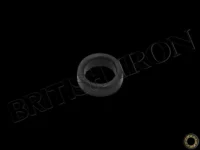
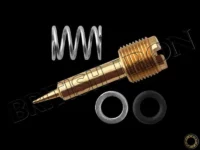
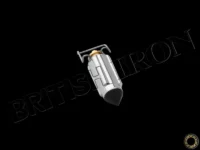
18-2842 K&L Fuel Petcock Repair Kit for Triumph Motorcycles
A leaking petcock will make your engine run rich or lean and flood your engine and airbox.
Diaphragm and gaskets needed to repair the vacuum operated petcocks on Triumph motorcycles.
Uses manifold vacuum to turn the fuel on/off.
Extinguish all open flames and follow the instructions in the service manual.
Fitment for this 18-2842 K&L Fuel Petcock Repair Kit:
- 92-93 Daytona 750/1000
- 93-06 Daytona 1200 (Carbs)
- 94-96 Speed Triple (Carbs)
- 93-98 Sprint (Carbs)
- 91-98 Trident
- 91-04 Trophy (Carbs)
This 18-2842 K&L Fuel Petcock Repair Kit item is not available for sale in nor shipment to California. The California Air Resource Board (CARB) prohibits the sale of this item per California Code of Regulations, Title 13 § 2220 et seq., California Code of Regulations, Title 13 § 2470 et seq., California Vehicle Code §§ 27156 and 38391, and California Health & Safety Code § 43151 et seq. CARB Enforcement Advisory
The product images shown are for illustrative purposes only and may not be an exact representation of the product received. Manufacturers occasionally make minor cosmetic changes to items, such as color, finish, label, or design. These changes do not impact the item’s function or compatibility. Please contact us if you have specific concerns regarding appearance.
K&L 18-2842 Fuel Petcock Repair Kit for Carbureted Triumph Triples and Fours
The K&L 18-2842 fuel petcock repair kit has the diaphragm, O-rings and gaskets you need to rebuild one vacuum-operated fuel petcock (fuel tap) on carbureted Hinckley Triumph triples and fours. These include the Trident, Trophy, Sprint, Speed Triple and Daytona. Rebuilding the original petcock stops fuel leaks and flooding, and it costs far less than a new tap assembly. The kit is made in Japan by K&L Supply.
A leaking petcock will make your engine run rich or lean and flood your engine and airbox. Over time, ethanol fuel, old fuel left to go stale and rust from the tank harden or tear the rubber diaphragm and seals. Once that happens, the tap can no longer shut the fuel off when the engine stops.
How a Vacuum-Operated Triumph Petcock Works
The petcock uses manifold vacuum to turn the fuel on and off. A vacuum hose runs from the intake side of the engine to a diaphragm chamber on the tap. When the engine is running in the ON or RES (reserve) position, vacuum pulls the diaphragm back and opens the valve. When the engine stops, a spring pushes the valve closed. The PRI (prime) position bypasses the vacuum valve, so fuel can fill empty float bowls before you start the bike. This petcock article describes the same vacuum-and-prime design used on many motorcycles.
Signs Your Petcock Needs Rebuilding
- Fuel dripping from the petcock body, the diaphragm cover or the joint between the tap and the tank
- Fuel in the vacuum hose, or a strong fuel smell after the bike has been parked
- Carburetors overflowing from the vent hoses, or fuel in the airbox
- Hard starting, a rich-running engine or fouled spark plugs
- Fuel starvation or misfiring at higher rpm, even though the bike runs on PRI
- A rising oil level or oil that smells of fuel
What’s in the Kit
- Vacuum diaphragm for the fuel valve
- O-rings and gaskets needed to reseal one petcock
- Made in Japan by K&L Supply
- Does not include the plastic diaphragm spacer block. Reuse your original if it is undamaged.
Fitment for This 18-2842 K&L Fuel Petcock Repair Kit
- 1992–1993 Daytona 750 and 1000
- Daytona 1200 (carbureted models)
- 1994–1996 Speed Triple (carbureted models)
- 1993–1998 Sprint (carbureted models)
- 1991–1998 Trident
- 1991–2004 Trophy (carbureted models)
Not for: models with a manual (non-vacuum) fuel tap. These include the 900 Tiger, Thunderbird 900, Thunderbird Sport, Legend TT and Adventurer, and the air-cooled Bonneville, T100, Thruxton, Scrambler, America and Speedmaster twins. This kit also does not fit fuel-injected Triumphs, which use an in-tank fuel pump instead of a petcock. If you are not sure which tap your bike has, look for a small vacuum hose connected to the petcock and a PRI position on the lever. You can also call or text us with your VIN.
Rebuilding the Petcock: Overview
Extinguish all open flames and follow the instructions in the service manual. Work outdoors or in a well-ventilated area.
- Turn the petcock off, then drain the fuel tank into an approved container.
- Remove the fuel and vacuum hoses, then remove the tank so you can take off the petcock safely.
- Remove the diaphragm cover screws slowly. The spring behind the diaphragm is under tension and is easy to lose.
- Clean the petcock body, filter screen and passages with carburetor cleaner. While the tap is off, look inside the tank for rust or flaking liner.
- Fit the new diaphragm, O-rings and gaskets. Make sure the diaphragm lip sits evenly in its groove, then tighten the cover screws in a criss-cross pattern.
- Refit the petcock and tank, reconnect the hoses and check for leaks in the OFF, ON, RES and PRI positions before you ride.
Complete the Fuel System Service
A failed petcock often leaves stale fuel and debris in the float bowls. If your carbs have been flooding, inspect the float needles and seats at the same time. For Mikuni BST-equipped triples and fours, see the K&L repair kit for Mikuni carbs (MBI-182450), the K&L float needle for Mikuni carbs and the Mikuni float bowl gasket. An auxiliary fuel bottle lets you run the engine with the tank removed. A Motion Pro carburetor synchronizer lets you balance the carbs after they go back on. Step-by-step help is in our Hinckley Triumph CV carb cleaning and tuning guide and our guide to reviving a barn-find carbureted Hinckley Triumph. You can browse more parts in our carburetor and fuel delivery collection.
This 18-2842 K&L Fuel Petcock Repair Kit item is not available for sale in nor shipment to California. The California Air Resource Board (CARB) prohibits the sale of this item per California Code of Regulations, Title 13 § 2220 et seq., California Code of Regulations, Title 13 § 2470 et seq., California Vehicle Code §§ 27156 and 38391, and California Health & Safety Code § 43151 et seq. CARB Enforcement Advisory
_____________________
Frequently Asked Questions
How can I test a vacuum-operated petcock before rebuilding it?
With the tap set to ON, disconnect the fuel hose and put the end in an approved fuel container. No fuel should flow while the engine is off. When vacuum is applied, either by cranking the engine or with a hand vacuum pump on the vacuum port, fuel should flow steadily. If fuel flows with no vacuum, flows weakly with vacuum, or appears in the vacuum hose, rebuild the petcock.
What do the ON, RES and PRI positions do on a Triumph vacuum petcock?
ON draws fuel from the main part of the tank, and RES draws from the reserve supply at the bottom. In both positions, fuel flows only while the engine is producing vacuum. PRI bypasses the vacuum valve and lets fuel flow freely, so you can refill empty float bowls before starting. After priming, return the lever to ON or RES and do not ride or park with it on PRI.
Can a leaking petcock get fuel into my engine oil?
Yes. If the petcock lets fuel through when the engine is off and a float needle also fails to seal, fuel can overfill a carburetor and run into a cylinder, then past the rings into the crankcase. If your oil level has risen or the oil smells of fuel, fix the petcock and float needles, and change the oil and filter before riding.
Do I need to remove the fuel tank to rebuild the petcock?
In most cases, yes. Drain the tank into an approved container, then remove it so you can take the petcock off and work on it safely at the bench. This is also a good time to check the inside of the tank for rust, which can clog the petcock filter and wear out the new seals. Follow the procedure in your Triumph service manual.
Should I rebuild my carburetors at the same time as the petcock?
If the carbs have been flooding, inspect the float needles and seats as well, because a leaking petcock often leaves debris and stale fuel in the float bowls. For Mikuni BST-equipped models, the K&L Mikuni carb repair kit (MBI-182450) and Mikuni float needle cover the usual wear parts. Our CV carb cleaning and tuning guide explains the process.
How long does it take to rebuild a Triumph fuel petcock?
Fitting the new parts usually takes less than an hour at the bench. Most of the time goes into draining and removing the tank, then refitting it and checking for leaks. Allow extra time if the petcock body or filter screen needs a thorough cleaning.
Can I order the K&L 18-2842 petcock kit in California?
No. This item is not available for sale in or shipment to California, because of California Air Resources Board (CARB) regulations. We ship it everywhere else in the United States, with free shipping to the lower 48 states.